
Introduction
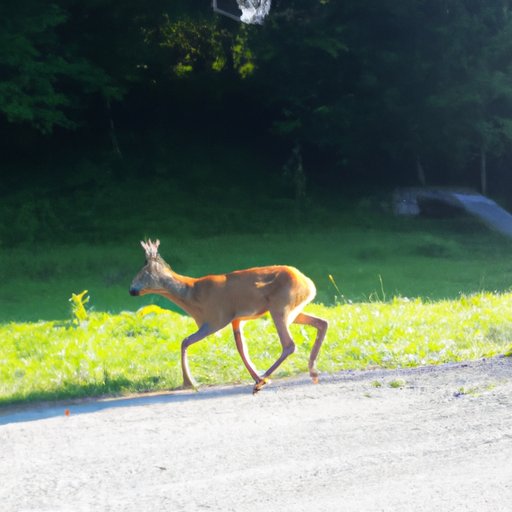
Deer are some of the most fascinating animals in the world. While they may appear to be fairly stationary creatures, they actually cover a remarkable amount of ground each year. But how far do deer travel from where they are born? This article seeks to answer this question by examining the research that has been done on deer migration and wandering patterns.

Tracking Studies: Examining How Far Deer Travel From Birthplaces
In order to understand how far deer travel from where they are born, scientists have conducted a number of tracking studies. These studies involve tagging deer with GPS devices, which allow researchers to monitor the movements of individual animals over time. The results of these studies have provided important insights into the migratory habits of deer.
One such study was conducted by researchers at the University of Alberta in Canada. The study tracked the movements of white-tailed deer over a period of three years. The researchers found that the deer moved an average of 16 kilometers (10 miles) from their birthplace during the course of the study. They also discovered that some of the deer had traveled more than 100 kilometers (62 miles) from their original location.
Another study, conducted by researchers at the University of Wisconsin-Madison, tracked the movements of mule deer over a period of six years. The researchers found that the deer moved an average of 38 kilometers (24 miles) from their birthplace. However, some of the deer had traveled more than 400 kilometers (250 miles) from their original location.
Exploring the Migration Habits of Deer: From Birthplace to Beyond
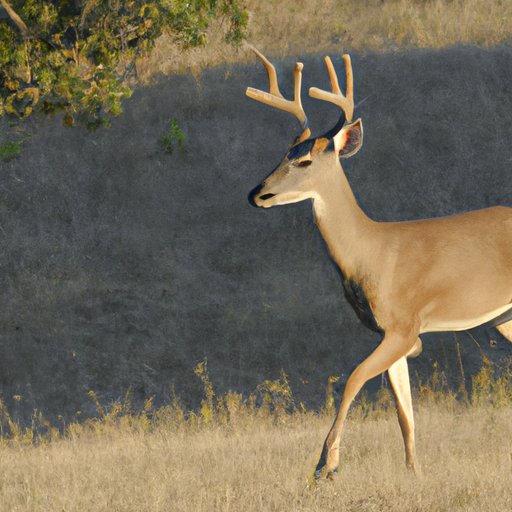
In addition to tracking studies, scientists have also sought to understand why deer migrate and what factors influence their migration patterns. One of the primary motivations for deer migration is food availability. Deer are drawn to areas where there is an abundance of food, such as meadows and fields. Additionally, deer will migrate to avoid harsh weather conditions or to seek out better habitat.
The size of the deer population in a particular area can also influence migration patterns. When a population becomes too large for its area, some of the deer will migrate in search of new habitats. In addition, the presence of predators can also cause deer to move away from certain areas.
A Look at How Far Deer Move After Birth
It is important to note that not all deer species travel the same distances from their birthplace. Different species of deer have different migration patterns and travel different distances. For example, white-tailed deer typically travel shorter distances than mule deer. The average distance traveled by white-tailed deer is 16 kilometers (10 miles), while the average distance traveled by mule deer is 38 kilometers (24 miles).
Additionally, some species of deer, such as elk and moose, may travel much farther from their birthplaces. Elk, for example, have been known to travel up to 1,000 kilometers (620 miles) from their birthplace. Similarly, moose have been recorded traveling up to 2,000 kilometers (1,240 miles) from their birthplace.
The Long-Distance Journeys of Deer: Exploring Their Travel Patterns
In addition to looking at the distances traveled by different species of deer, researchers have also sought to understand the routes taken by migrating deer. It has been found that deer tend to follow routes along ridges, rivers, and other natural features. Additionally, some species of deer, such as elk, may migrate in large herds, while others, such as mule deer, may migrate alone.
Furthermore, researchers have sought to understand the effects of long-distance travel on deer populations. It has been found that long-distance migrations can increase the spread of disease, reduce genetic diversity, and create competition for resources among deer populations.

Investigating How Far Deer Wander: Understanding Their Movement After Birth
In addition to migration, deer also wander after birth. This post-birth wandering occurs when young deer explore their surroundings and search for food. The extent of this wandering varies depending on the species of deer. White-tailed deer, for example, have been recorded traveling up to 3 kilometers (2 miles) from their birthplace, while elk have been recorded traveling up to 8 kilometers (5 miles).
Researchers have also sought to understand the causes of post-birth wandering. It has been found that young deer may wander in search of new food sources or to escape from predators. Additionally, the presence of humans in an area can also lead to increased wandering, as deer may be drawn to open spaces created by human development.
Finally, researchers have sought to understand the impacts of post-birth wandering on deer populations. It has been found that excessive wandering can lead to increased mortality rates, reduced reproductive success, and decreased population sizes.
Conclusion
This article has explored how far deer travel from where they are born. Through tracking studies and further research, it has been found that deer travel varying distances from their birthplace, with some species traveling much longer distances than others. Additionally, deer may wander after birth, although the extent of this wandering varies depending on the species of deer. Finally, it has been found that excessive wandering can have negative impacts on deer populations.
Overall, this article has provided an overview of the various aspects of deer movement, from migration to post-birth wandering. It is clear that deer are highly mobile creatures and that their movements can have significant impacts on their populations. Further research is needed to better understand the migration and wandering habits of deer and their effects on deer populations.
(Note: Is this article not meeting your expectations? Do you have knowledge or insights to share? Unlock new opportunities and expand your reach by joining our authors team. Click Registration to join us and share your expertise with our readers.)