
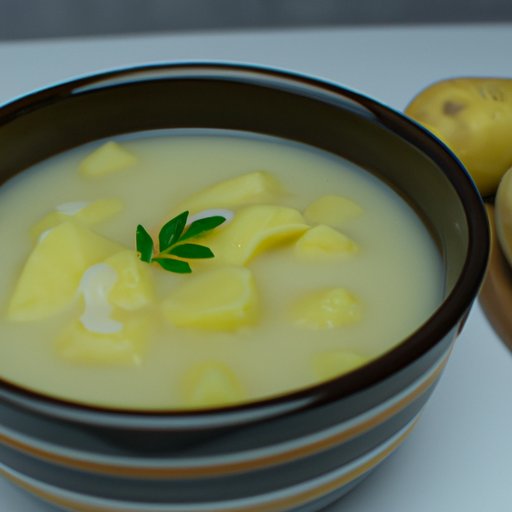
Introduction: What Is Potato Soup?
Potato soup is a classic comfort food that’s enjoyed around the world. It typically consists of potatoes, broth, milk, butter, and seasonings. Depending on the recipe, it may also contain toppings such as bacon, cheese, and scallions.
Potato soup can be a nutritious addition to your diet when made with healthy ingredients. But you can also easily turn it into an unhealthy dish by adding too much fat and sodium. Read on to learn more about the nutritional benefits and risks of potato soup, plus recipes for making it in a healthier way.

Nutritional Benefits of Potato Soup
Potatoes are packed with beneficial vitamins and minerals. According to the USDA, a medium-sized potato contains almost half of the daily recommended value of vitamin C, plus significant amounts of potassium, magnesium, and iron.
Potato soup is also a good source of protein. “A cup of potato soup made with milk or cream provides 8–9 grams of protein,” says nutritionist Dr. Anju Sood. “This amount can help meet the daily needs of adults.”
In addition, potato soup can be a low-calorie option if you make it with fewer high-fat ingredients. “It’s possible to make a delicious and nutritious soup with just potatoes, broth, and herbs,” says registered dietitian Marisa Moore. “This type of soup can even be lower in calories than other soups because potatoes are naturally low in calories.”
How to Make a Healthy Potato Soup
When making potato soup, use the right potatoes. Russet potatoes are the best choice since they are starchy and absorb flavors well. Avoid red potatoes, which are waxy and don’t break down as easily.
You should also opt for a low-sodium broth or stock. This will help keep the sodium content in check. And avoid high-fat toppings like bacon, sour cream, and full-fat cheese.
“Adding vegetables to potato soup can add flavor and nutrition,” says Moore. “Try adding diced carrots, celery, onions, and bell peppers for a well-rounded soup. If you want to boost the protein content, add cooked chicken, turkey, or shrimp.”

The Health Risks of Eating Too Much Potato Soup
Potato soup can be a healthy dish, but it can also be unhealthy if you’re not careful. The biggest risk of eating too much potato soup is that it can be high in sodium. “Most store-bought varieties contain more than 700 milligrams of sodium per serving,” says Sood. “This is more than a third of the recommended daily intake for adults.”
Potato soup can also be high in fat. “If you’re using cream or whole milk, you’ll be adding saturated fat to the soup,” says Moore. “And if you’re topping it with cheese, bacon, or sour cream, you’ll be adding even more fat and calories.”
Finally, eating too much potato soup can lead to a lack of nutrient diversity. “Potatoes are a good source of many vitamins and minerals,” says Moore. “But if you eat them every day, you won’t be getting the variety of nutrients that you need for optimal health.”

Recipes for Healthy Potato Soups
Making a healthy potato soup doesn’t have to be complicated. Here are three recipes that are easy to make and packed with flavor.
Classic Potato Soup
Ingredients: 2 tablespoons olive oil, 1 onion, 2 cloves garlic, 4 medium potatoes, 2 tablespoons all-purpose flour, 4 cups low-sodium vegetable broth, 2 teaspoons fresh thyme, 1 teaspoon sea salt, ½ teaspoon black pepper, 2 tablespoons chopped parsley.
Instructions: Heat the olive oil in a large pot over medium heat. Add the onion and garlic and cook until softened, about 5 minutes. Peel and chop the potatoes, then add to the pot. Cook for 10 minutes, stirring occasionally. Sprinkle the flour over the vegetables and stir to combine. Gradually pour in the broth, stirring constantly. Bring to a simmer and cook for 20 minutes. Add the thyme, salt, and pepper. Remove from heat and stir in the parsley. Serve hot.
Creamy Potato Soup
Ingredients: 2 tablespoons olive oil, 1 onion, 3 cloves garlic, 4 medium potatoes, 1 teaspoon dried oregano, 4 cups low-sodium vegetable broth, ¼ cup heavy cream, 2 tablespoons chopped parsley, Salt and pepper to taste.
Instructions: Heat the olive oil in a large pot over medium heat. Add the onion and garlic and cook until softened, about 5 minutes. Peel and chop the potatoes, then add to the pot. Cook for 10 minutes, stirring occasionally. Add the oregano, then gradually pour in the broth. Bring to a simmer and cook for 20 minutes. Remove from heat and stir in the cream and parsley. Season with salt and pepper to taste. Serve hot.
Roasted Garlic Potato Soup
Ingredients: 6 cloves garlic, 2 tablespoons olive oil, 4 medium potatoes, 1 teaspoon smoked paprika, 4 cups low-sodium vegetable broth, ¼ cup plain Greek yogurt, 2 tablespoons chopped parsley, Salt and pepper to taste.
Instructions: Preheat oven to 350°F. Peel and mince the garlic, then toss with the olive oil in a small baking dish. Roast in the preheated oven for 15 minutes. Peel and chop the potatoes, then add to a large pot. Cook for 10 minutes, stirring occasionally. Add the paprika, then gradually pour in the broth. Bring to a simmer and cook for 20 minutes. Remove from heat and stir in the roasted garlic, yogurt, and parsley. Season with salt and pepper to taste. Serve hot.
Ways to Add Nutrients to Potato Soup
You can make potato soup even healthier by adding nutrient-rich ingredients. Leafy greens like spinach and kale are a great way to add vitamins A, C, and K. You can also use skim milk or almond milk instead of cream for a lower-fat option.
Legumes like chickpeas and lentils are another great way to boost the nutrition of your soup. They add fiber, protein, and essential vitamins and minerals. You can also try adding cooked quinoa, brown rice, or barley for added texture and nutrition.
Conclusion
Potato soup is a delicious and comforting dish that can fit into a healthy diet. When made with the right ingredients, it can provide a good source of vitamins, minerals, and protein. To make a healthy potato soup, choose the right potatoes, use low-sodium broth, and avoid high-fat toppings. You can also add nutrient-rich ingredients like leafy greens, legumes, and whole grains.
However, it’s important to be mindful of the potential health risks of eating too much potato soup. It can be high in sodium and fat, and it can lead to a lack of nutrient diversity. To stay healthy, enjoy potato soup in moderation and mix up your meals with other nutrient-dense foods.
(Note: Is this article not meeting your expectations? Do you have knowledge or insights to share? Unlock new opportunities and expand your reach by joining our authors team. Click Registration to join us and share your expertise with our readers.)