
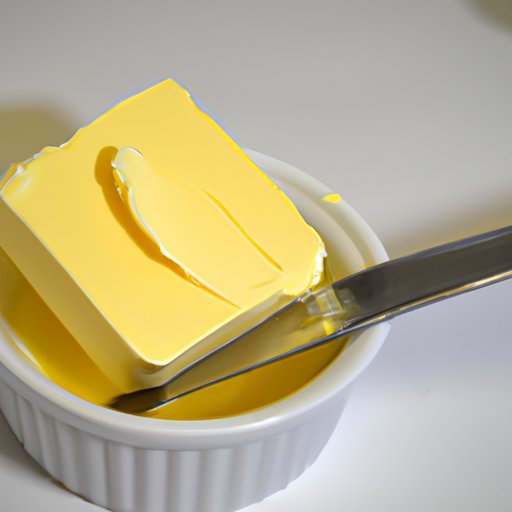
Introduction
Butter has been a staple ingredient in many cultures for centuries, and is often used to add flavor and richness to dishes. But not all butter is created equal; some varieties, such as grass-fed butter, are purported to be healthier than other types. So what exactly are the benefits of grass-fed butter and is it really a healthier choice? This article will explore the nutritional differences between grass-fed and non-grass-fed butters, examine the potential health benefits of consuming grass-fed butter, and discuss the potential risks associated with its consumption.
Comparison of Grass-Fed and Non-Grass-Fed Butters: Nutritional Benefits and Potential Risks
Grass-fed butter is made from milk produced by cows that have been exclusively fed grass, rather than grain or other feed. This type of butter is typically higher in certain beneficial nutrients than non-grass-fed butter, including omega-3 fatty acids, vitamins A and E, and conjugated linoleic acid (CLA). Let’s take a closer look at the nutritional differences between these two types of butter.
Nutrient Content
Studies have found that grass-fed butter contains significantly more omega-3 fatty acids than non-grass-fed butter. According to a study published in the Journal of Dairy Science, grass-fed butter contains an average of five times more omega-3 fatty acids than butter from cows fed a grain-based diet. Omega-3 fatty acids are essential for optimal health, and have been linked to a number of health benefits, including improved cardiovascular health and reduced inflammation.
Omega-3 Fatty Acids
In addition to being higher in omega-3 fatty acids, grass-fed butter is also higher in vitamin A and E. According to a study published in the British Journal of Nutrition, grass-fed butter contains three times more vitamin A and two times more vitamin E than non-grass-fed butter. Vitamin A is essential for healthy vision and immunity, while vitamin E is an important antioxidant that helps protect cells from damage.
Vitamin Content
Grass-fed butter is also higher in conjugated linoleic acid (CLA), a type of healthy fat that has been shown to reduce inflammation, improve cholesterol levels, and aid in weight loss. According to a study published in the American Journal of Clinical Nutrition, grass-fed butter contains up to five times more CLA than non-grass-fed butter.
Potential Risks
It’s important to note that grass-fed butter does contain saturated fat, which has been linked to an increased risk of heart disease when consumed in excess. Therefore, it’s important to keep your intake of saturated fat from all sources, including butter, within the recommended limits.
The Benefits of Grass Fed Butter: Why it’s a Healthier Choice
The higher nutrient content of grass-fed butter has been linked to a number of potential health benefits. Let’s take a closer look at some of the potential benefits of consuming grass-fed butter.
Lower Risk of Heart Disease
The higher omega-3 fatty acid content of grass-fed butter has been linked to a lower risk of heart disease. According to a study published in the European Journal of Clinical Nutrition, people who consume higher amounts of omega-3 fatty acids have a lower risk of developing coronary heart disease. Additionally, the higher vitamin A and E content of grass-fed butter may help protect against heart disease by reducing inflammation and improving cholesterol levels.
May Help Reduce Inflammation
The higher CLA content of grass-fed butter has been linked to a reduction in inflammation. According to a study published in the American Journal of Clinical Nutrition, people who consume higher amounts of CLA have lower levels of inflammatory markers in their blood, suggesting that CLA may help reduce inflammation.
Improved Digestive Health
The higher omega-3 fatty acid content of grass-fed butter may also help improve digestive health. According to a study published in the Journal of Lipid Research, people who consume higher amounts of omega-3 fatty acids have a lower risk of developing inflammatory bowel diseases, such as Crohn’s disease and ulcerative colitis.
An Overview of the Pros and Cons of Grass-Fed Butter
Now that we’ve explored the potential benefits of grass-fed butter, let’s take a look at the pros and cons of consuming this type of butter.
Pros
- Higher omega-3 fatty acid content, which may reduce the risk of heart disease
- Higher CLA content, which may help reduce inflammation and improve cholesterol levels
- Higher vitamin A and E content, which may help protect against heart disease
Cons
- Contains saturated fat, which can increase the risk of heart disease when consumed in excess
- More expensive than non-grass-fed butter
- Not widely available in stores
How Does Grass-Fed Butter Affect Our Health?
Now that we’ve looked at the pros and cons of grass-fed butter, let’s take a closer look at how it affects our health.
Improved Cholesterol Levels
The higher omega-3 fatty acid content of grass-fed butter has been linked to improved cholesterol levels. According to a study published in the American Journal of Clinical Nutrition, people who consume higher amounts of omega-3 fatty acids have lower levels of low-density lipoprotein (LDL) cholesterol, or “bad” cholesterol. Additionally, the higher CLA content of grass-fed butter has been linked to improved cholesterol levels, as well.
Reduced Risk of Diabetes
The higher vitamin A content of grass-fed butter has been linked to a reduced risk of diabetes. According to a study published in the American Journal of Clinical Nutrition, people who consume higher amounts of vitamin A have a lower risk of developing type 2 diabetes. The higher omega-3 fatty acid content of grass-fed butter may also help reduce the risk of diabetes, as it has been linked to improved insulin sensitivity.
Improved Cognitive Function
The higher omega-3 fatty acid content of grass-fed butter has been linked to improved cognitive function. According to a study published in the American Journal of Clinical Nutrition, people who consume higher amounts of omega-3 fatty acids have better memory and cognitive performance than those who consume lower amounts.
Exploring the Nutritional Differences between Grass-Fed and Non-Grass-Fed Butters
Now that we’ve explored the potential health benefits of grass-fed butter, let’s take a closer look at the nutritional differences between these two types of butter.
Fat Content
Both grass-fed and non-grass-fed butter contain similar amounts of total fat. However, grass-fed butter is higher in omega-3 fatty acids, which may offer numerous health benefits.
Protein Content
Both grass-fed and non-grass-fed butter contain similar amounts of protein. However, grass-fed butter is higher in CLA, which may reduce inflammation and improve cholesterol levels.
Calorie Count
Both grass-fed and non-grass-fed butter contain similar amounts of calories. However, grass-fed butter is higher in vitamins A and E, which may help protect against heart disease.
Grass-Fed Butter: Is It Really Healthier than Other Butters?
Yes, grass-fed butter is generally considered to be healthier than other types of butter due to its higher nutrient content. It is higher in omega-3 fatty acids, CLA, and vitamins A and E, all of which have been linked to various health benefits. In addition, grass-fed butter is lower in saturated fat than non-grass-fed butter, which may help reduce the risk of heart disease.
What to Look for When Buying Grass-Fed Butter
When shopping for grass-fed butter, look for labels that say “100% grass-fed” or “grass-fed only”. Also, check the ingredient list to make sure that the butter is made only from grass-fed cows’ milk. Additionally, look for brands that are organic and free of antibiotics and added hormones.
Conclusion
In conclusion, grass-fed butter is generally considered to be a healthier choice than non-grass-fed butter due to its higher nutrient content. It is higher in omega-3 fatty acids, CLA, and vitamins A and E, all of which have been linked to various health benefits. Additionally, grass-fed butter is lower in saturated fat than non-grass-fed butter, which may help reduce the risk of heart disease. When shopping for grass-fed butter, look for labels that say “100% grass-fed” or “grass-fed only”, and check the ingredient list to make sure that the butter is made only from grass-fed cows’ milk. Furthermore, look for brands that are organic and free of antibiotics and added hormones.
Further research is needed to investigate the potential health benefits of grass-fed butter and to confirm its effects on our overall health. Additionally, more research is needed to explore the environmental impact of grass-fed butter production and compare it to other types of butter production.
(Note: Is this article not meeting your expectations? Do you have knowledge or insights to share? Unlock new opportunities and expand your reach by joining our authors team. Click Registration to join us and share your expertise with our readers.)