
Introduction
Data science is an interdisciplinary field that combines mathematics, computer science, statistics, and other scientific fields to analyze large datasets and draw meaningful conclusions. Automation is the process of using technology to automate certain tasks or processes, such as data collection, analysis, and decision-making. In this article, we will explore the impact of automation on data science and analyze the benefits and limitations of automated data science.

Exploring the Impact of Automation on Data Science
Automation has become increasingly important in data science due to its ability to increase accuracy and efficiency, reduce costs, and improve scalability. However, there are also challenges associated with automation, such as the risk of errors and biases in automated systems, difficulty in understanding complex models, and lack of human creativity.
Analyzing the Benefits of Automating Data Science
One of the main advantages of automating data science is increased accuracy and efficiency. Automated systems can quickly process large amounts of data, identify patterns, and draw conclusions more accurately than humans. This can increase the speed and accuracy of analysis, leading to better decisions and improved outcomes. Additionally, automated data science can lead to cost savings, as automated systems require fewer resources than manual processes.
Automated data science can also improve scalability. Automated systems can be easily scaled up or down to meet changing demands, allowing organizations to quickly adjust their strategies and operations in response to market changes or new opportunities. This increased agility can be invaluable in today’s rapidly changing business environment.

Examining the Limitations of Automated Data Science
While there are many advantages to automating data science, there are also some challenges associated with this approach. One of the main risks of automated systems is the potential for errors and biases. Automated systems rely on algorithms, which are programmed by humans and can contain flaws or biases. This can lead to incorrect or biased results that could have serious consequences.
Additionally, understanding complex models generated by automated systems can be difficult. Automated systems can generate extremely complex models that may be difficult for humans to interpret. This can make it challenging to identify any flaws or biases in the model and ensure its accuracy.
Finally, automated data science lacks the human element. Automated systems cannot replicate the creativity and intuition that humans bring to data analysis. While automated systems can be useful tools, they should not replace human judgement entirely.
Investigating the Future of Automated Data Science
The future of automated data science is closely linked to the development of artificial intelligence (AI). AI has the potential to revolutionize data science by enabling machines to learn from data and make predictions without relying on predetermined algorithms. This could lead to more accurate and efficient data analysis, as well as improved scalability.
In addition, automated data science has the potential to be applied to a wide range of applications. For example, automated data science could be used to detect fraud or predict customer behavior. It could also be used to develop personalized recommendations, automate medical diagnosis, and improve public safety.
Comparing Manual and Automated Data Science Practices
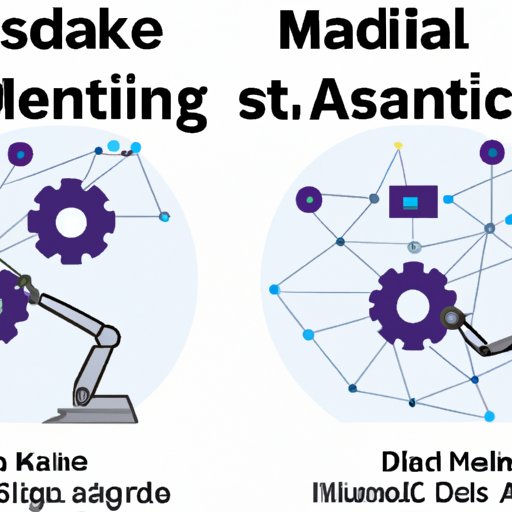
When deciding between manual and automated data science practices, there are several factors to consider. Manual processes are generally more reliable and less prone to error, but they can be time-consuming and expensive. On the other hand, automated processes can be faster and more cost-effective, but they can also be prone to errors and bias.
Ultimately, the best approach will depend on the specific needs of the organization. Organizations should consider the cost, accuracy, speed, and scalability requirements of their data science projects when deciding between manual and automated processes.
Conclusion
In conclusion, automation has had a significant impact on data science. Automated data science can provide increased accuracy and efficiency, cost savings, and improved scalability. However, automated systems can also be prone to errors and bias, and they lack the human element. As AI continues to develop, automated data science will continue to evolve and become even more powerful. Organizations should carefully consider the pros and cons of manual and automated data science processes when deciding which approach is best for their needs.
(Note: Is this article not meeting your expectations? Do you have knowledge or insights to share? Unlock new opportunities and expand your reach by joining our authors team. Click Registration to join us and share your expertise with our readers.)