
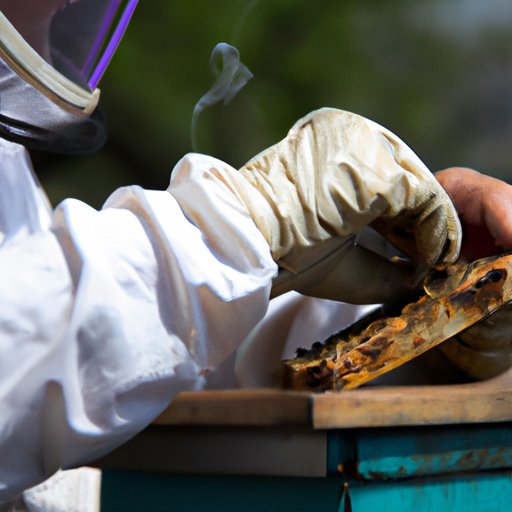
Introduction
Beekeeping is a fascinating hobby that offers many benefits to both the environment and the beekeeper. It’s an opportunity to observe nature up close, learn about bee behavior, and cultivate a sustainable relationship with one of the most important species on Earth. But before you start, it’s important to understand the basics.
Overview of Beekeeping
According to the American Beekeeping Federation (ABF), beekeeping “involves the maintenance of colonies of honeybees in hives.” The bees are kept in these hives for the purpose of producing honey, pollinating crops, and/or providing beeswax for various products. Beekeepers must tend to their hives regularly and manage them carefully to ensure the health of the colony.
Benefits of Beekeeping
The ABF states that beekeeping has many ecological, economic, and educational benefits. Ecologically, bees are essential for the pollination of plants and other crops, which is necessary for the growth and survival of many species. Economically, beekeeping can provide income from the sale of honey, beeswax, and other related products. Educationally, beekeeping offers a unique opportunity to observe and learn about bee behavior and biology.
Getting Started in Beekeeping
If you’re interested in getting started in beekeeping, the first step is to purchase the necessary beekeeping equipment. This includes a bee suit, smoker, hive tool, and hive box. You’ll also need to obtain bees, either by purchasing a nucleus colony or catching a swarm. Finally, you’ll need to build a beehive for the bees to live in. Once you have all of the necessary supplies and equipment, you’re ready to begin.
Understanding Bee Behavior
One of the most important aspects of beekeeping is understanding how bees behave and what they need to thrive. According to Dr. Marla Spivak, an entomologist at the University of Minnesota, “It’s important to look for signs of disease or distress in your colony and take appropriate action if you see any.” Additionally, it’s important to monitor hive activity to make sure the bees are healthy and productive.
Techniques for Beekeeping
Once you’ve established a colony of bees, there are several techniques you can use to successfully manage them. Hive management is key to keeping your bees healthy and productive. This includes inspecting the hive regularly and ensuring the bees have enough food and space to thrive. Additionally, you can harvest honey from the hive and perform mite control to keep the colony free of pests.

Building a Sustainable Relationship with Bees
As a beekeeper, it’s important to cultivate a sustainable relationship with your bees. This means providing them with adequate sources of food, such as flowers and water, and protecting their habitat from pesticides and other environmental threats. According to Dr. Spivak, “By developing a better understanding of bee behavior and learning how to create a healthy habitat for them, we can help ensure the survival of this incredibly important species.”
Legal Regulations and Safety Precautions
Before you get started in beekeeping, it’s important to familiarize yourself with local laws and regulations. Additionally, it’s important to take the necessary safety precautions when handling bees. This includes wearing protective gear such as a bee suit and veil, and using a smoker to calm the bees. As Dr. Spivak says, “Beekeeping is a rewarding hobby, but it’s important to follow the proper safety procedures to ensure your safety and the safety of your bees.”
Conclusion
Beekeeping is a rewarding hobby that offers many benefits to both the environment and the beekeeper. It’s an opportunity to observe nature up close, learn about bee behavior, and cultivate a sustainable relationship with one of the most important species on Earth. To get started, it’s important to purchase the necessary equipment, obtain bees, build a beehive, and understand bee behavior. Additionally, it’s important to provide adequate food sources and protect their habitat. Lastly, it’s important to familiarize yourself with local laws and safety precautions. For more information about beekeeping, visit the American Beekeeping Federation website.
(Note: Is this article not meeting your expectations? Do you have knowledge or insights to share? Unlock new opportunities and expand your reach by joining our authors team. Click Registration to join us and share your expertise with our readers.)