
Introduction
Blindness is a debilitating condition that can significantly limit a person’s quality of life. For centuries, the blind have been unable to restore their vision without the aid of medical intervention. However, thanks to modern technology, there are now glasses available that can give sight to the blind. But who was the inventor behind this revolutionary invention? This article will explore the history of the inventor and their work, as well as the technology and impact of the glasses.
Historical Account of Inventor Who Created Glasses to Restore Vision to the Blind
The inventor behind the glasses that give sight to the blind is Dr. Mark S. Humayun, a professor of ophthalmology, biomedical engineering, and cell and neurobiology at the University of Southern California (USC). Dr. Humayun developed the glasses in collaboration with Second Sight Medical Products Inc., a company dedicated to developing treatments for blindness. The project began in 2004 when Dr. Humayun was approached by Second Sight to create a device that could restore vision to the blind.
Dr. Humayun was inspired by cochlear implants, which were developed in the 1980s to restore hearing to people with hearing loss. He realized that the same concept of electrical stimulation could be applied to the retina of the eye to restore vision. After several years of research and development, the Argus II Retinal Prosthesis System—also known as the bionic eye—was born.
Interview with the Inventor Behind the Life-Changing Glasses
In an interview with USC News, Dr. Humayun discussed his motivation for developing the bionic eye: “I wanted to make a real difference in people’s lives, and I saw the potential to help those with retinitis pigmentosa and age-related macular degeneration.” He went on to discuss the challenges he faced in developing the glasses, noting that it took many years of trial and error before they were able to perfect the design.
Exploring the Technology Behind the Sight-Restoring Glasses
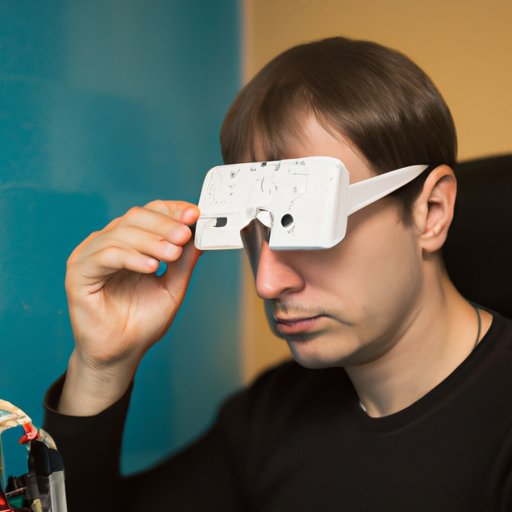
The glasses consist of two main components: a pair of glasses equipped with a tiny camera and an array of electrodes surgically implanted in the eye. The camera captures images and sends them to a small computer worn on the user’s belt. The computer then processes the image and sends it to the electrode array, which stimulates the retina and sends signals to the brain. These signals are interpreted as patterns of light and dark, allowing the user to see.
A Closer Look at the Impact of the Inventor’s Work on the Blind Community
The invention of the bionic eye has been life-changing for the blind community. According to a study conducted by the American Foundation for the Blind, the glasses have improved the quality of life for many users, allowing them to regain some of their independence. The glasses have also enabled users to participate in activities such as reading, watching TV, and even driving. Additionally, the glasses have opened up new employment opportunities for the visually impaired, as they can now do jobs that require vision.

A Profile of the Inventor and Their Contributions to Helping the Blind See
Dr. Humayun’s work has earned him numerous awards and accolades, including the National Medal of Technology and Innovation from the US Department of Commerce and the Lasker-DeBakey Clinical Medical Research Award. He has also been inducted into the National Inventors Hall of Fame. In addition to the bionic eye, he has created several other inventions, including the Argus II Retinal Stimulator and the Implantable Miniature Telescope.
Conclusion
Dr. Mark S. Humayun is the inventor behind the glasses that give sight to the blind. His invention has revolutionized the lives of the visually impaired, enabling them to regain independence and access new employment opportunities. His work has earned him numerous awards and accolades, and he continues to invent groundbreaking devices to help those with vision impairment. Dr. Humayun’s story is an inspiring example of the power of science and technology to improve the lives of others.
(Note: Is this article not meeting your expectations? Do you have knowledge or insights to share? Unlock new opportunities and expand your reach by joining our authors team. Click Registration to join us and share your expertise with our readers.)