
Introduction
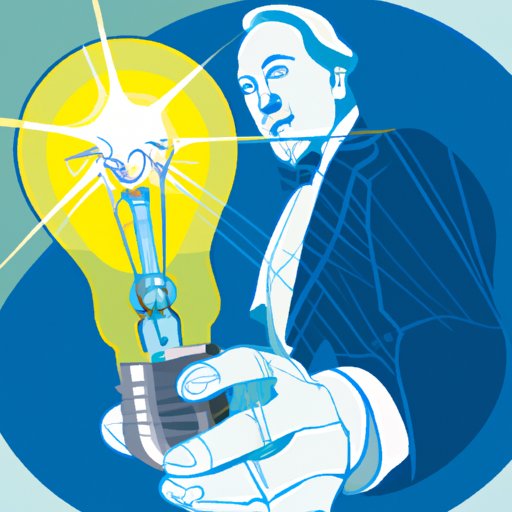
Thomas Edison is one of the most famous inventors in history. He is best known for his invention of the light bulb in 1879, which revolutionized the way people live and work. This article will explore the history of Thomas Edison’s invention of the light bulb and its impact on society.
A Historical Look at the Invention of the Light Bulb: Thomas Edison in 1879
The story of Thomas Edison and the invention of the light bulb begins in the late 19th century. Edison was an inventive genius who had already developed several inventions before he began working on the light bulb. He had a strong interest in electricity and wanted to find a way to use it as a source of lighting. He was determined to create a practical, efficient, and cost-effective lighting solution that could be used in homes and businesses.
At the time, there were several different types of electric lights being developed, but none of them were able to provide the kind of reliable, long-lasting light that Edison was looking for. He realized that the only way to make a successful light bulb was to develop a new kind of filament that would be able to withstand the heat generated by electricity. After much trial and error, Edison finally figured out how to create a carbonized bamboo filament that could withstand the heat.
Exploring the Impact of Thomas Edison’s Invention of the Light Bulb
The invention of the light bulb changed the world drastically. Before the light bulb, people were limited to using natural sources of light such as fire and candles. With the invention of the light bulb, electricity became a reliable source of lighting for homes and businesses. This allowed people to stay up later and get more done. The invention of the light bulb also paved the way for other technological advancements, such as the development of electrical appliances and electronic devices.
In addition, the invention of the light bulb made it possible to illuminate public spaces such as streets and parks, allowing people to move around more safely at night. The invention of the light bulb also inspired the development of other forms of artificial lighting, such as fluorescent and LED lights.
An Inside Look at the Development of the Light Bulb and Thomas Edison’s Role
Thomas Edison was not the first to come up with the idea of the light bulb, but he was the one who perfected it. He spent years experimenting and refining his design until he came up with a practical, efficient, and cost-effective light bulb. Edison’s improvements included a stronger filament, better insulation, and a longer-lasting bulb.
Edison also worked closely with scientists and engineers to develop the infrastructure necessary to power the light bulb. His team included experts in electricity, chemistry, and physics, all of whom worked together to develop the technology needed to make the light bulb a reality.
A Timeline of Thomas Edison’s Invention of the Light Bulb in 1879
The journey to creating the light bulb began in 1878 when Thomas Edison began working on the project. Here is a timeline of the events leading up to the invention of the light bulb in 1879:
- 1878 – Thomas Edison begins working on the light bulb.
- September 1879 – Edison builds the first light bulb prototype.
- October 1879 – Edison and his team begin testing the light bulb.
- November 1879 – Edison and his team refine the light bulb.
- December 1879 – The final product – the light bulb – is ready.
Conclusion
Thomas Edison’s invention of the light bulb in 1879 changed the world. It allowed people to stay up later, do more work, and move around more safely at night. It also paved the way for many other technological advancements and inspired the development of other forms of artificial lighting. Thomas Edison’s work has had an enduring impact on the world and will continue to do so in the future.
Throughout the development of the light bulb, Thomas Edison showed incredible perseverance and dedication. He worked tirelessly to perfect his invention and ultimately succeeded in creating a reliable, long-lasting source of light. His legacy lives on today, and we owe him a great debt of gratitude for his contribution to the world.
(Note: Is this article not meeting your expectations? Do you have knowledge or insights to share? Unlock new opportunities and expand your reach by joining our authors team. Click Registration to join us and share your expertise with our readers.)