
Introduction
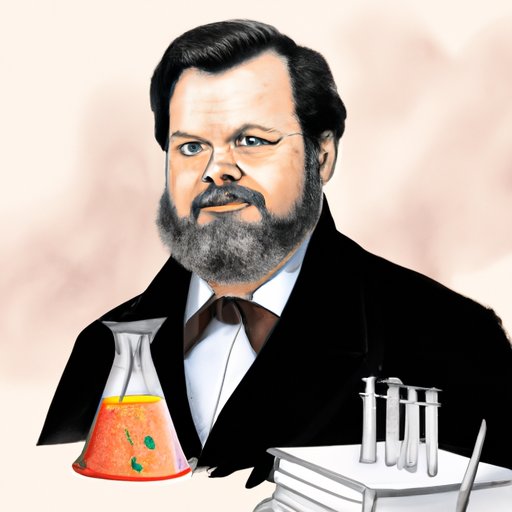
The development of the science of bacteriology can be traced back to the work of the French scientist Louis Pasteur in the 19th century. Through his groundbreaking experiments, Pasteur revolutionized our understanding of bacteria and its role in disease. In this article, we will explore the life and legacy of Louis Pasteur, as well as his major contributions to the field of bacteriology.
An Overview of the Life and Work of Louis Pasteur: The Father of Bacteriology
Louis Pasteur was born in 1822 in Dole, France. He studied chemistry and physics at the École Normale Supérieure in Paris, where he became a professor of chemistry in 1854. During his long career, Pasteur made major contributions to the fields of chemistry, biology, and medicine. He is best known for his pioneering work in the field of bacteriology, which laid the foundation for modern microbiology.

A Historical Perspective on Bacteriology: Tracing its Origins to Louis Pasteur
Before Pasteur’s work, very little was known about bacteria and their role in causing disease. In the mid-19th century, many scientists believed that living organisms could spontaneously arise from nonliving matter. This theory, known as spontaneous generation, was widely accepted until Pasteur disproved it with his famous swan neck flask experiment.
In this experiment, Pasteur showed that bacteria could not arise from nonliving matter. Instead, he demonstrated that bacteria were present in the air and could contaminate food and drink if left open to the air. This was the first step in understanding the role of bacteria in causing disease.
Exploring the Impact of Louis Pasteur’s Contributions to Bacteriology
Pasteur’s work revolutionized our understanding of bacteria and their role in causing disease. He was the first to demonstrate that bacteria could cause spoilage in food and drink, leading to the development of pasteurization, a process used to kill harmful bacteria in food and beverages. He also discovered that certain bacteria could cause infectious diseases, leading to the development of vaccines for these diseases.
Pasteur’s studies also helped to develop the germ theory of disease, which states that certain microorganisms can cause specific diseases. This theory has had a profound impact on modern medicine, as it has led to the development of effective treatments for a variety of infectious diseases.

The Pioneering Research of Louis Pasteur in the Field of Bacteriology
Pasteur’s studies in the field of bacteriology were wide-ranging and influential. His research on fermentation and food spoilage led to the development of pasteurization as a way to prevent foodborne illness. He also conducted extensive studies on infectious diseases and their prevention, which laid the foundation for the development of vaccines.
Pasteur also conducted groundbreaking experiments on the transmission of infectious diseases. He demonstrated that diseases such as anthrax and chicken cholera could be transmitted through the air, and that they could be prevented by vaccination. This was a major breakthrough in the understanding of infectious diseases and their prevention.
How Louis Pasteur’s Studies Shaped the Science of Bacteriology
Pasteur’s studies had a profound impact on the development of the science of bacteriology. His work helped to develop the germ theory of disease, which states that certain microorganisms can cause specific diseases. This theory has been instrumental in the development of modern medicine, as it has allowed for the development of effective treatments for a variety of infectious diseases.
Pasteur’s studies also helped to shape our understanding of the role of bacteria in causing disease. His work showed that bacteria could cause food spoilage, and that certain bacteria could cause infectious diseases. This knowledge has been crucial in the development of public health measures to prevent the spread of disease.
Examining the Legacy of Louis Pasteur’s Contributions to Bacteriology
The legacy of Louis Pasteur’s work in the field of bacteriology is still felt today. His studies have been instrumental in the development of modern medicine and public health. Pasteurization is an important public health measure that is used to prevent foodborne illness, and vaccines have been developed to prevent a variety of infectious diseases.
Pasteur’s work also continues to inspire ongoing research in the field of bacteriology. As our understanding of bacteria and its role in causing disease continues to grow, so too does our appreciation for Pasteur’s pioneering work.
Conclusion
Louis Pasteur is rightly regarded as the father of bacteriology. Through his groundbreaking experiments and pioneering research, he revolutionized our understanding of bacteria and its role in causing disease. His work laid the foundation for modern microbiology and has had a lasting impact on modern medicine and public health. Pasteur’s legacy lives on in the ongoing research inspired by his work.
(Note: Is this article not meeting your expectations? Do you have knowledge or insights to share? Unlock new opportunities and expand your reach by joining our authors team. Click Registration to join us and share your expertise with our readers.)